
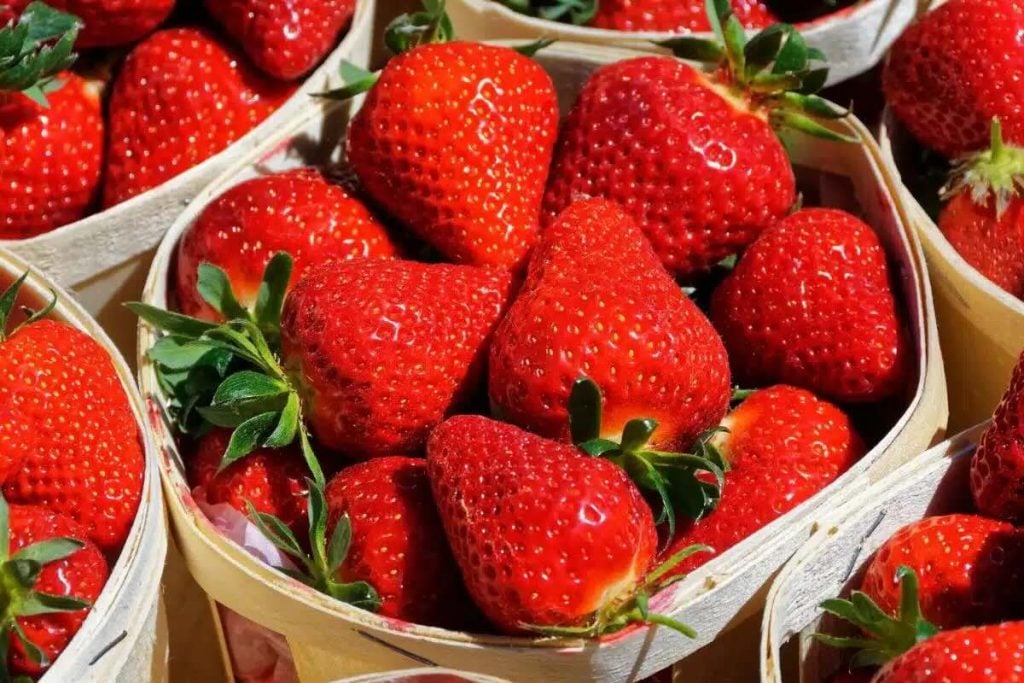
Strawberries sit near the top of almost every list of summer’s most beloved fruits. They also sit near the top of a less flattering list — the Environmental Working Group’s Dirty Dozen, an annual ranking of conventionally grown produce carrying the highest levels of pesticide residue. A quick rinse under the tap feels sufficient. For most people, it has always been sufficient. But the research on what actually remains on strawberry skin after a standard water rinse suggests the habit deserves a closer look.
Washing strawberries properly takes no special equipment and very little extra time. The difference between a cursory rinse and a genuinely effective clean comes down to understanding what each method actually removes — and choosing accordingly.
Why Baking Soda Outperforms Plain Water
Among the available cleaning methods, baking soda dissolved in cold water stands out as one of the most effective and practical options for home use. Its advantage over plain water is chemical rather than mechanical. Water removes loose dirt and dislodges some surface residue through physical contact. Baking soda goes further by breaking down the bond between pesticide residue and the waxy surface of the berry, making it possible to rinse away contaminants that water alone would leave behind.
Compared to vinegar — the other commonly recommended alternative — baking soda offers a gentler experience for both the berry and the person eating it. Vinegar solutions can leave a faint acidic aftertaste on strawberries if the rinsing step is not thorough enough. Baking soda leaves nothing detectable behind, neither in flavour nor in texture.
The method itself requires almost no effort. Dissolve roughly one teaspoon of baking soda in a large bowl of cold water — several cups is sufficient to fully submerge a standard punnet of berries. Place the strawberries in the bowl and leave them to soak for five minutes. During that time, gently swish them around to help dislodge dirt and loosen surface residue. After soaking, lift the berries out and rinse them thoroughly under cold running water before patting them dry with a clean paper towel or cloth.
This approach works well for conventionally grown strawberries where pesticide residue is the primary concern. It also serves a useful purpose with organic berries, which may carry less chemical residue but still accumulate soil, bacteria from handling, and contaminants introduced during packaging and transport.
Other Methods Worth Knowing About
No single cleaning method removes every possible contaminant, and different approaches suit different priorities. Understanding what each one actually does helps in choosing the right tool for the situation.
Plain cold water under a running tap remains the fastest and most accessible option. Research suggests it removes up to around 80 percent of surface pesticides when berries are rinsed for a full ten to twenty seconds — a better result than many people achieve with a casual splash. For everyday use when pesticide residue is a lower concern, a thorough rinse under running water provides a reasonable baseline clean.
A vinegar solution offers stronger pesticide and bacteria reduction than water alone. Mixing one part white vinegar or apple cider vinegar with three parts cold water and soaking berries for five to twenty minutes can meaningfully reduce surface contamination. The trade-off is the potential for residual vinegar flavour if the subsequent rinse is not careful and complete. Rinsing under running water for a full thirty seconds after removing berries from the vinegar soak addresses this effectively in most cases.
Salt water serves a specific and somewhat different purpose. A teaspoon of salt dissolved in a cup of water creates a solution that draws out small insects — including the tiny larvae associated with spotted wing drosophila, a pest that affects strawberries in certain growing regions. Soaking for at least five minutes and rinsing well afterward leaves no detectable saltiness on the fruit. Salt does relatively little for pesticide residue, making it a targeted tool rather than a general cleaning solution.
Commercial produce washes and fruit-specific soaps occupy a large space in the retail market but earn little support from food safety authorities. Neither the FDA nor the CDC recommends their use, and both agencies note the risk of leaving soap residue on fruit that then gets consumed. The appeal of a dedicated product is understandable, but the evidence does not support spending money on something that performs no better than baking soda and water at a fraction of the cost.
Ultrasonic produce cleaners have gained visibility through social media and online retail platforms. These devices use high-frequency sound waves to agitate water around produce, theoretically dislodging contaminants more thoroughly than soaking alone. The concept is scientifically plausible. The evidence for meaningful superiority over a careful hand-wash method in a home setting remains limited, and the cost of the devices is considerable relative to the established alternatives.
Storing Strawberries to Make the Cleaning Worth It
Washing strawberries correctly is only half the equation. How they are stored after cleaning determines how long that freshness lasts and whether the effort invested in cleaning translates into berries that are actually enjoyable to eat days later.
The single most important storage principle is moisture management. Strawberries deteriorate rapidly when wet. Washing introduces moisture that, if not fully removed before storage, accelerates the growth of mould and speeds up softening. Patting berries completely dry before refrigerating them — not just surface dry, but genuinely dry around the hull and in the natural creases of the fruit — makes a significant difference to how long they remain in good condition.
For berries that will not be eaten immediately, the best approach is to leave them unwashed in the refrigerator and clean only what will be eaten in a given sitting. This keeps moisture away from the stored fruit entirely. Line a container with paper towel to absorb any ambient moisture, arrange the berries in a single layer where possible, and cover loosely rather than sealing tightly — airflow helps prevent the humid conditions that mould favours.
Stored this way, strawberries typically remain in good condition for five to seven days. Inspecting them daily and removing any berry that shows bruising or the early signs of mould prevents the rapid spread that one deteriorating fruit can cause to its neighbours.
A Few Habits That Make a Consistent Difference
Removing the green hulls before washing rather than after is a common but counterproductive habit. Hulling before soaking allows water and cleaning solution to enter the interior of the berry, accelerating softening and waterlogging the flesh. Washing berries whole and hulling only when ready to eat preserves both texture and flavour.
Avoiding hot or warm water during cleaning protects the delicate surface of the berry. Cold water maintains firmness and prevents the fruit from absorbing excess liquid during soaking. The temperature of the cleaning water matters more than most people realise when the goal is a berry that tastes as fresh after washing as it did before.
Taking thirty seconds to check berries for damage before washing and again before storage requires almost no effort and pays back consistently in fewer unpleasant discoveries and less wasted fruit. A single bruised or overripe berry left in a container releases moisture and ethylene gas that hastens the decline of everything around it.
The gap between a strawberry washed in a quick tap rinse and one cleaned properly in a baking soda soak, dried thoroughly, and stored with attention to moisture is not dramatic in effort. In flavour, texture, and peace of mind about what is actually being consumed, the difference is consistently worth making.